
Next March, Taiwan is embarking on the construction of an 80 wind turbine, 640 MW wind farm - Asia-Pacific’s largest.
Taiwan’s offshore wind industry has, so far, tracked that of the US. To date, both have completed just one small-scale project.
But Taiwan’s trajectory will soon outpace the US. Yunlin, Asia-Pacific’s largest wind farm, is due to start construction next March, some five miles off the coast of western Taiwan. The project will install a total capacity of 640MW, through 80 wind turbines of 8MW each.
Offshore wind promises to be a key component of Taiwan’s renewable energy and the country is moving at top speed to ramp up wind-driven power. “It’s very ambitious,” said Matthias Mross, managing partner of Global Renewables Shipbrokers. Hamburg-based GRS has the contract for procurement consulting services for transport and installation of the project.
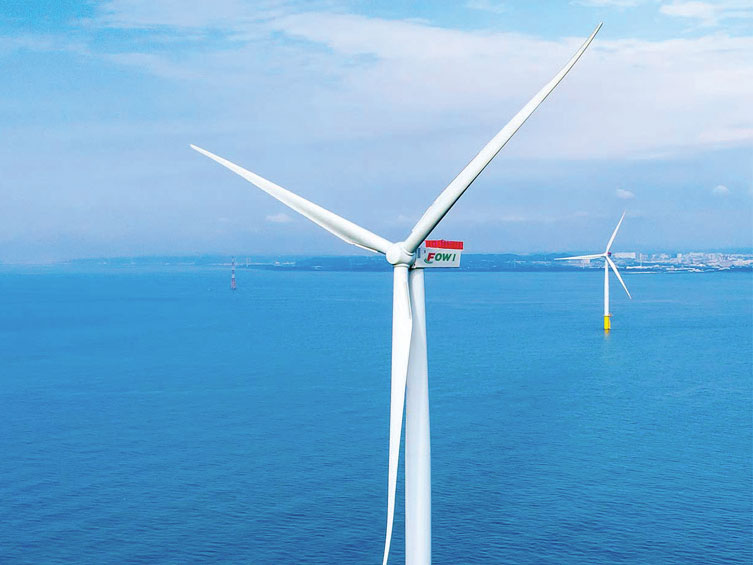
German developer Wpd AG heads the Yunlin project, along with a consortium of Japanese power and utilities interests. Wpd also has a contract to construct a 350MW offshore wind farm near Taoyuan County.
The Netherlands’ Jumbo Maritime and Malaysia’s Sapura Energy were awarded contracts for the transportation and installation of the mono-piles for the first project. It’s Sapura’s first foray into offshore wind.
Wpd isn’t the only European wind developer making forays into Taiwan. Denmark’s Ørsted, the world’s largest wind power developer, confirmed in April that it will build two offshore wind farms in Taiwan totaling 900MW, with construction due to begin in 2021.
Taiwan demonstrates how offshore wind is sweeping through East Asia. China is projected to become the world’s largest offshore wind generator in the next three years, overtaking the current leader, United Kingdom. By 2022, China will have installed almost 11GW of offshore wind power, according to FTI Consulting.
East Asian Offshore Wind
Other East Asian nations are pressing ahead as well. According to the research and consulting firm Wood McKenzie, South Korea should install 6.4GW of offshore wind power by 2030. Japan recently passed a law that should spur offshore wind development there as well, although it must overcome some geological and water depth impediments first.
The Taiwan government announced rate subsidies and incentives for offshore power in 2017, with further clarifications earlier this year. These rates incentives spurred a flurry of interest and development. Taiwan has proposals on the table for projects totaling 10.5GW, according to Offshore Magazine.
Taiwan is attempting to play catch up with neighbors. It’s also benefitting from advances in wind power technology. Bigger, more powerful turbines translate into more power generated from fewer installations. That means construction costs come down as well, although challenges can mount.
The Taiwan example also shows the opportunities available for construction and logistics support, as the country attempts to rapidly jumpstart and develop a supply chain. The ports of Kaohsiung and Taichung will also need improvements to receive and stage the wind farm components.
With construction, logistics support and maintenance, the country needs to take a measured approach to what it does itself and what it relies on others to do, Mross believes. Taiwan will depend on foreign companies and talent at first, eventually transitioning to domestic suppliers. Meanwhile, domestic companies will gain expertise and knowledge as they invest in the industry and partner with outside companies.
“Our role is to set up such knowhow transfer by bringing in experienced companies from Europe to Taiwan, [and pairing them] with Taiwanese companies, whether it be a joint venture or a loose cooperation,” Mross said.
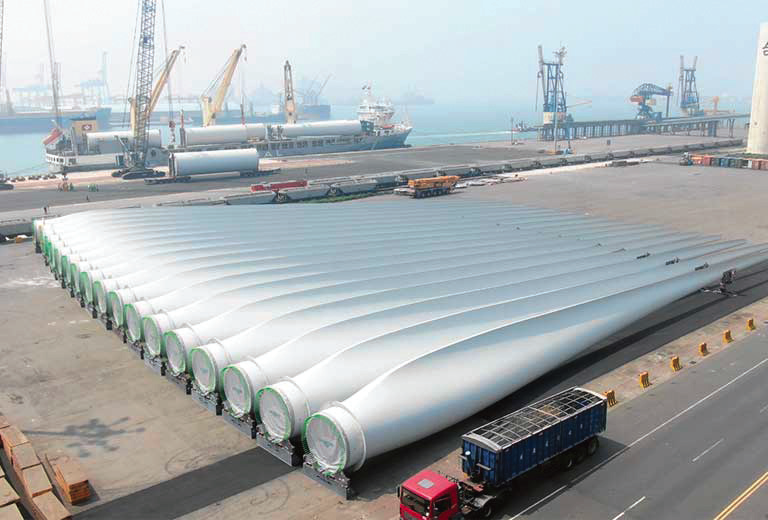
The vessels needed to service both the construction and the ongoing operations of the wind farm provide one example. And Mross contrasted how Taiwan is approaching its support of the industry with the US, which is circumscribed by the Jones Act. In the initial stages of development, Taiwan will allow foreign-flagged vessels to supply and support offshore construction projects. According to Mross, the government will permit for the foreseeable future the large, highly specialized foreign-flagged, jack-up vessels necessary for construction. For smaller vessels, the government supports a transition from foreign-flagged vessels to domestic fleets and Taiwan crews, he said. (see Buxbaum story on page 3)
“That has important implications because it takes time to build up a local proper supply chain, which goes from smaller products, smaller services up to the larger, fully contracted services,” said Mross. “Taiwan has made a quite good approach to that, allowing time to reach a critical mass for their local supply industry.”
This transitional period should assist Taiwan’s efforts to not only develop an indigenous supply chain, but to get up to speed on wind farm operation and maintenance. That’s critical, Mross believes, because foreign companies won’t be in Taiwan forever and local companies must eventually take responsibility. As he pointed out, a utility can’t afford to wait months until a foreign crew arrives to repair an out-of-commission turbine.
This transference process will take several years, and progress from the simpler tasks to the more complex. Local crew transfer vessels, according to Mross, can become proficient in a few months’ time.
Follow us on social media: