

Exports still burdened by 70% Chinese tariff
California citrus growers were hoping that the Phase One trade deal between the United States and China would boost their export prospects. That appears not to be the case.
U.S. citrus exports to China continue to trade subject to a 70% tariff, most of which was imposed to retaliate against Trump administration levies on Chinese goods beginning in March 2018. The resulting slump in exports forced more fruit onto the domestic market, causing a 10% drop in prices for navel oranges, the leading California citrus commodity. Navel prices are down by one-third since the 2017-2018 growing season.
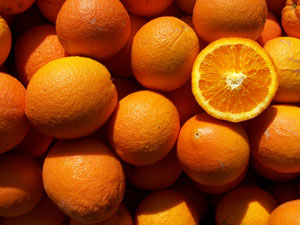
China Citrus Exports Squeezed
China has historically been among the top five export destinations for California’s fresh citrus, but the most recent shipping season saw a drop of an estimated 50%. “Exports to China have slowed significantly and have put downward pressure on the domestic market,” said Casey Creamer, president of California Citrus Mutual, a trade association advocating for commercial citrus growers. “Pricing last year was the worst we’ve seen in recent memory.
“It’s no better now,” he added, referring to the aftermath of the trade deal.
It’s not hard to see why that’s the case. The Phase One trade agreement was signed on January 15 by President Donald Trump and China’s Vice Premier Liu. He included commitments by China to purchase an additional $200 billion worth of U.S. agricultural products, manufactured goods, energy, and services above 2017 levels over the next two years, including over $30 billion annually for agriculture. The Trump administration agreed to lower tariffs on imports from China, but tariffs remain in place on over two-thirds of their value, covering 93% of components imports and 69% of consumer products.
While calling for increased buying of U.S. agricultural products by China, the agreement doesn’t do anything for citrus growers specifically—while other U.S. agricultural products are mentioned by name. The lobbying of the U.S. Trade Representative by a leading House Republican apparently was to no avail.
“It is vital that fresh citrus is included in any Chinese purchases of American agricultural products,” Rep. Kevin McCarthy, the House Republican leader, who represents California’s 23rd district in the Central Valley, wrote USTR Robert Lighthizer. “This would not only help ensure that California fresh citrus retains a presence in China, but would also mitigate the negative impacts growers experience due to Chinese tariffs on American fresh citrus.”
Phasing in Phase One
U.S. and Chinese agricultural exports could very well benefit from the Phase One provisions, which calls for both parties “not to implement regulations or assessments that are not science- or risk-based,” according to Duane Layton, an international trade attorney at the law firm of Mayer Brown. China has also “agreed to implement a transparent, predictable, efficient, science- and risk-based regulatory process for evaluation and authorization.”
It’s unclear how the U.S. would enforce any of the buying levels spelled out in Phase One, let alone for citrus which is not even mentioned in the agreement. On the other hand, the agreement does loosen restrictions on other agricultural commodities, paving the way for increased U.S. exports to China.
Chapter 3 Annex 11 Article 6 of the agreement provides that within one month of the deal going into effect, China’s General Administration of Customs (GAC) and the U.S. Department of Agriculture’s Animal and Plant Health Inspection Service (APHIS) will implement a phytosanitary protocol to allow the importation of Californian nectarines into China. Articles 7 and 8 call for APHIS and GAC to implement protocols within three months to permit the importation of U.S. blueberries and Californian Hass avocados into China. All that is great news for American growers of blueberries, nectarines, and avocados, but it doesn’t do anything for citrus growers.
California and Florida are responsible for most of the world’s orange production, according to a recent report from ResearchAndMarkets.com. The U.S. is the world’s fourth largest overall citrus producer, behind Brazil, China, and the European Union. About 90% of oranges grown in the U.S. are consumed by the domestic market, while nine percent are exported. But Chinese importers have historically paid a premium for U.S. citrus, benefiting growers’ top lines and playing a stabilizing role for prices.
Talking Turkey
The trade scuffles of 2019 have seen China retreat from the U.S. citrus marketplace, after China imposed a 20% tariff on the fruit, and, as the dispute escalated, taking it to 60% and then 70%, resulting in plummeting prices and lost revenues. U.S. citrus is now losing market share to Chile, South Africa, Australia, Egypt, and Turkey.
Turkey in particular is making a big push to export more kinds of fruits and vegetables to China by negotiating relaxed import protocols with the Chinese government. In 2019, Turkish exporters succeeded in obtaining revisions to the Chinese import protocol for cherries, removing a 16-day cold treatment requirement. As of the end of August 2019, Turkey had exported 80,000 tons of cherries worth $183 million to China. The year before, Turkish exports of the fruit to China totaled $27,000. In the past five years, Turkey more than doubled its revenue from hazelnut exports to China to $87.1 million in 2019, according to the Mediterranean Exporters Association of Turkey.
The Turkish Ministry of Commerce recently published a list of food products, reflecting priorities for adding to exports to China, and citrus fruits were number one. Turkey’s relatively close proximity to China “makes citrus fruit the most likely product to increase exports to China,” according to the exporters association.
Turkey currently has no citrus exports to China because China’s import protocol prevents the fruits from remaining fresh, according to the group. But Turkey’s success with cherries augurs well for that county’s citrus exporters as well.
In his recent annual State of the Port speech, Mario Cordero, executive director of the Port of Long Beach, predicted that the Phase One agreement between the U.S. and China will bring more U.S. agricultural exports to the port. That may very well be the case, but the way things look now, increased citrus exports to China don’t appear to be in the cards.
Follow us on social media: